Video: Protruck Weekend Test Drive
March 15, 2012 Leave a comment
We’ve put together some video clips for ZZK Racing from this weekend’s Protruck test drive.
Cross-country desert trucks
March 15, 2012 Leave a comment
We’ve put together some video clips for ZZK Racing from this weekend’s Protruck test drive.
March 14, 2012 Leave a comment
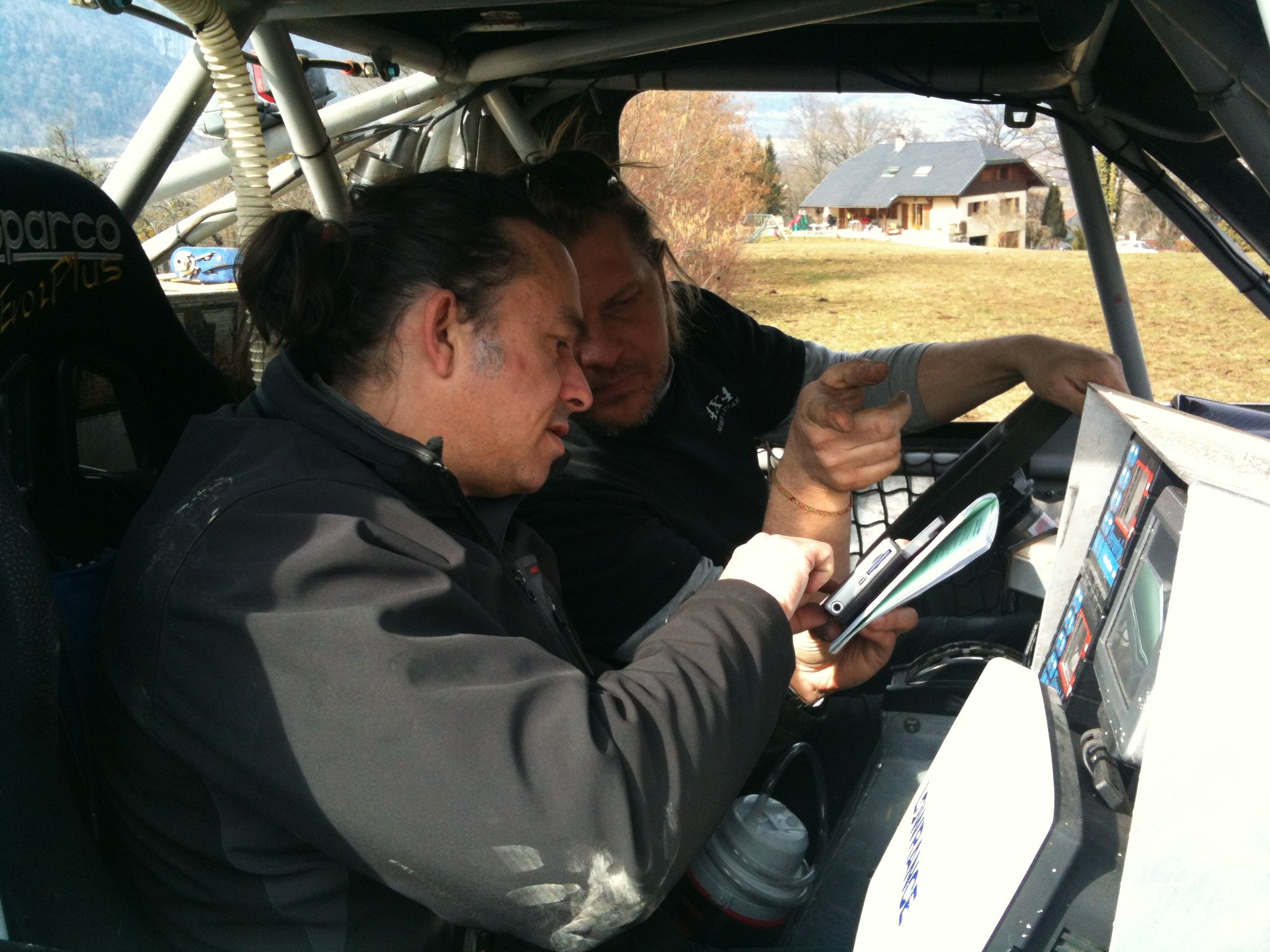
Stéphane and Caroline took their Protruck for a test drive this weekend to make sure everything had been correctly tuned and make final adjustments before the Rally. We had a chance to go along and take a few pictures.

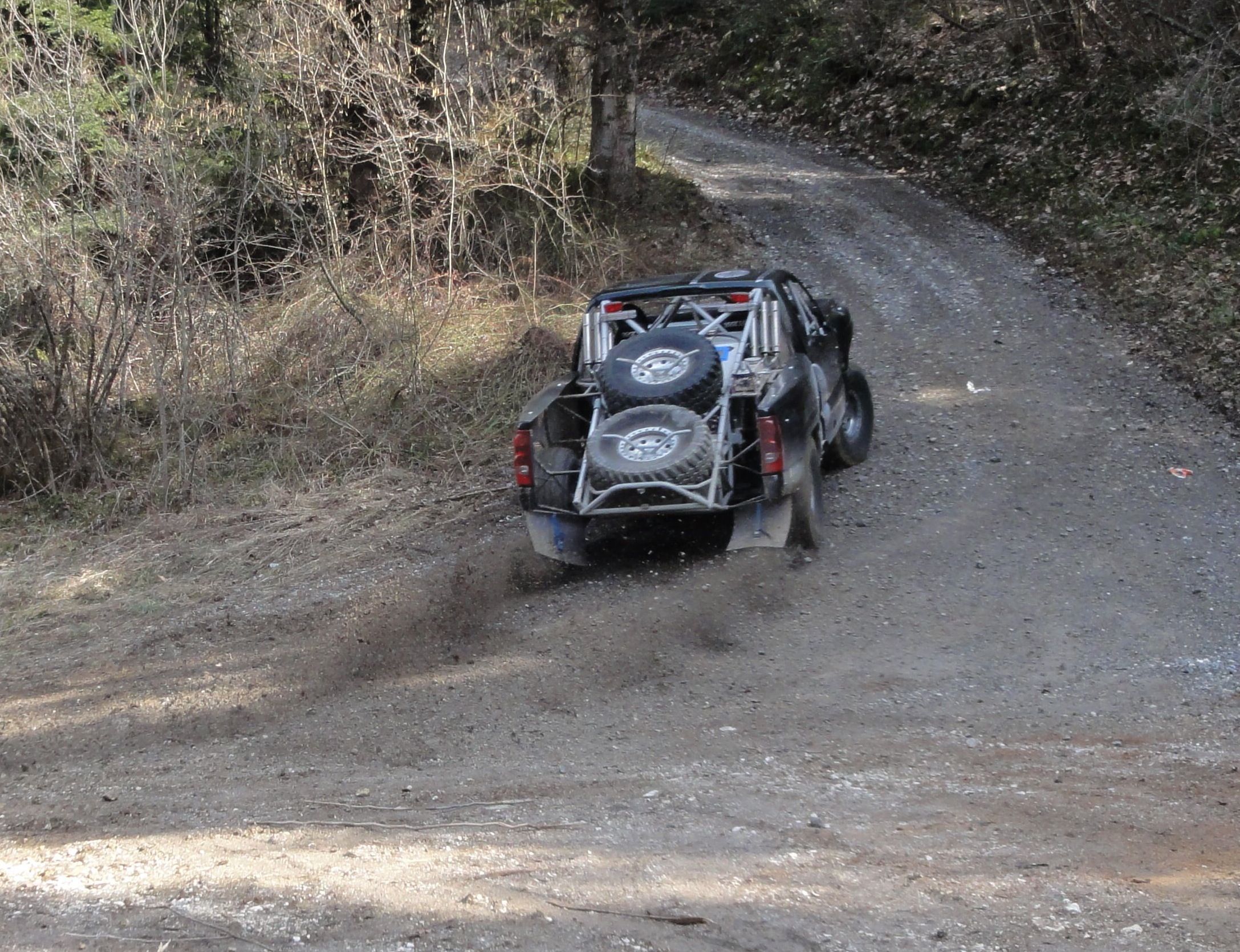
The Protruck was previously sponsored by Chevrolet and has a Corvette LS2 350 HP (limited by airflow intake restrictions) 6 Liter V8 engine, with an Aluminum engine block and forged pistons. Unlike the Trophy Truck, the Protruck has a front center motor. Empty, it has a mass of 1.4 tons, 2 tons filled up and with crew. Fuel consumption is 55 liters average and around 85 liters in the sand. The truck has two fuel tanks that together hold 560 liters of fuel.

Analysing the results of the TerraTrip calibration to calculate the correction factor:

A few action photos on a sharp turn:

March 12, 2012 Leave a comment
Only 3 days until we leave for the Tuareg Rallye, a private race in Morocco for offroad 4×4 cars and motorcycles. The rally takes place over 8 days from March 18-26 and covers 2,230 km of Special Stages consisting of mixed terrain, dirt tracks and dunes. Starting in Nador and arriving in camp at Merzouga on Day 2, Days 3, 4 and 5 consist of Specials that will take place around Merzouga before the race heads back to Nador on Day 6. Following the ferry back to Spain on Day 7, the rally finishes in Mojácar on Day 8.
We’ll be part of the support team for ZZK Racing, a new Swiss racing team sponsored by ZZ Kustom, specialist in Jeep and 4×4 preparation and offroad competitions.
The team has entered five cars in the rally, the Chevrolet Pro Truck of Stéphane and Caroline, the Bowler Tomcat driven by Florian and his co-pilot Yvan, the Mitsubishi Pajero II Evo of Sylvain and Cécile, and two Nissan patrols, driven by Raoul and Pascal.
We’ll be behind the wheel of the MAN KAT (5T Mil GL) assistance truck. Olivier and Philippe will provide mechanical support and assistance, aided by Christophe who is going to make it a point to keep the Pro Truck’s windshield squeaky clean.
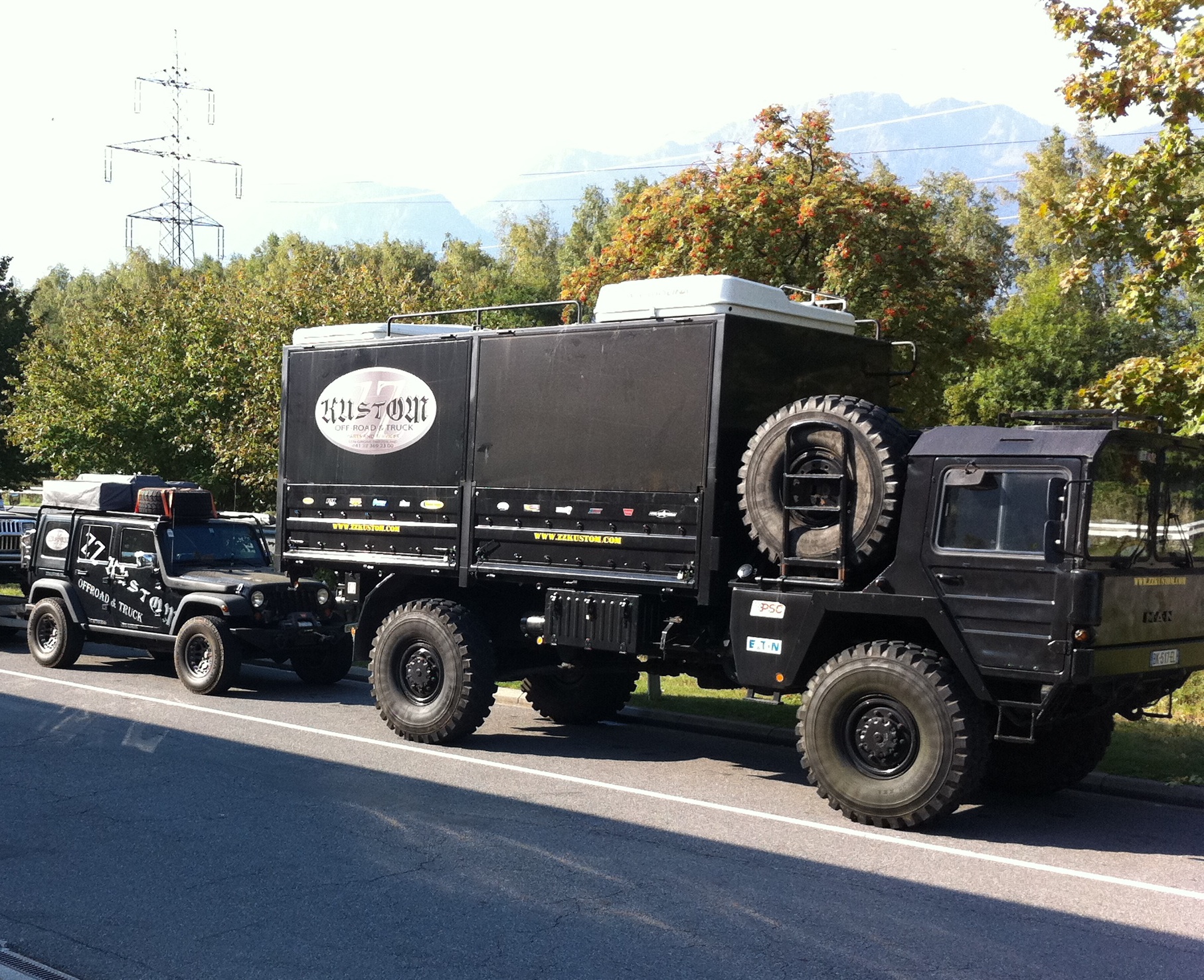
We leave Switzerland on Friday morning for the long drive to Almeria, where we’ll catch one of two ferries arranged by the organizers to Morocco. The JK Rubicon is pulling the trailer for the Pro Truck and we’ll be joined by several other vehicles during the trip south since we’ll be meeting the French part of the team on route somewhere south of Bordeaux.
December 29, 2011 1 Comment
We had a chance to spend a beautiful afternoon in Saint Cyprien-Plage on Tuesday at the departure assembly point and technical inspection for the Africa Eco Race. According to the announcer on the loudspeaker, 160 vehicles are registered in the race, counting heavy trucks, cars, side-by-side and motorcycles.
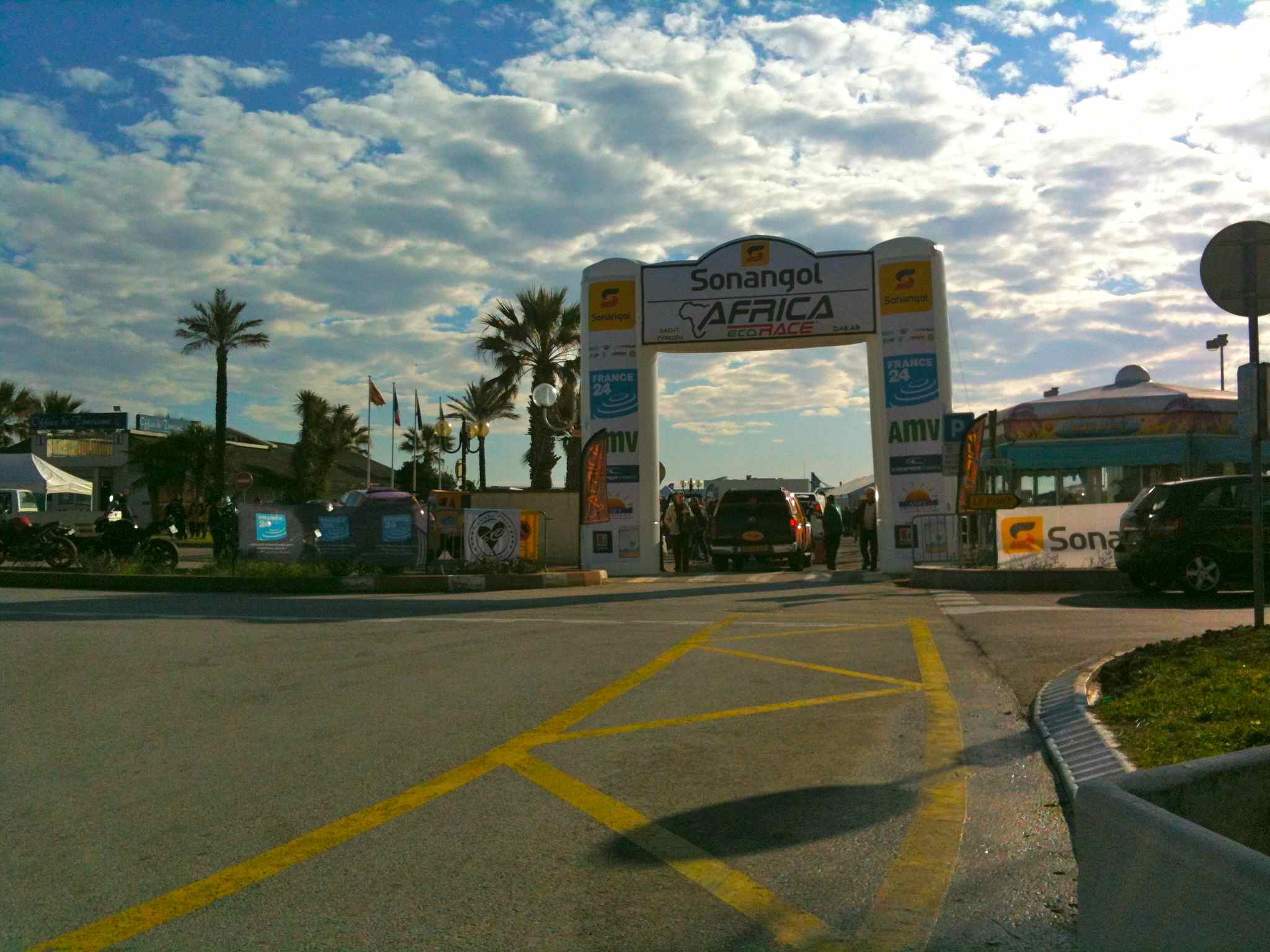
A selection of the best photos from the day follows.
August 15, 2011 Leave a comment
We’ve had a hard time getting back to the blog following our return from Dresden. It was so much easier to find time to post when we were there, even though we were posting from an iPhone!
It’s been a few weeks too since the final standings for the Breslau Rally were published on the official website.
Since most of our readers will probably be interested in the Trucks Category, we’ll start with some of our pictures of the winners in that category:
1st Place: Harald Chemnitz and Philipp Beier (501: IFA-L60)

2nd Place: Leon de Wit Leon, Andre Breed and Pieter Volkers (519: Mercedes Benz-SK)

3rd Place: Robert Striebe Robert and Josefine Unger-Bachmann (517: Man-Kat1)
Unfortunately, we didn’t get any pictures of Striebe and Unger-Bachmann.
From team Up To The End,
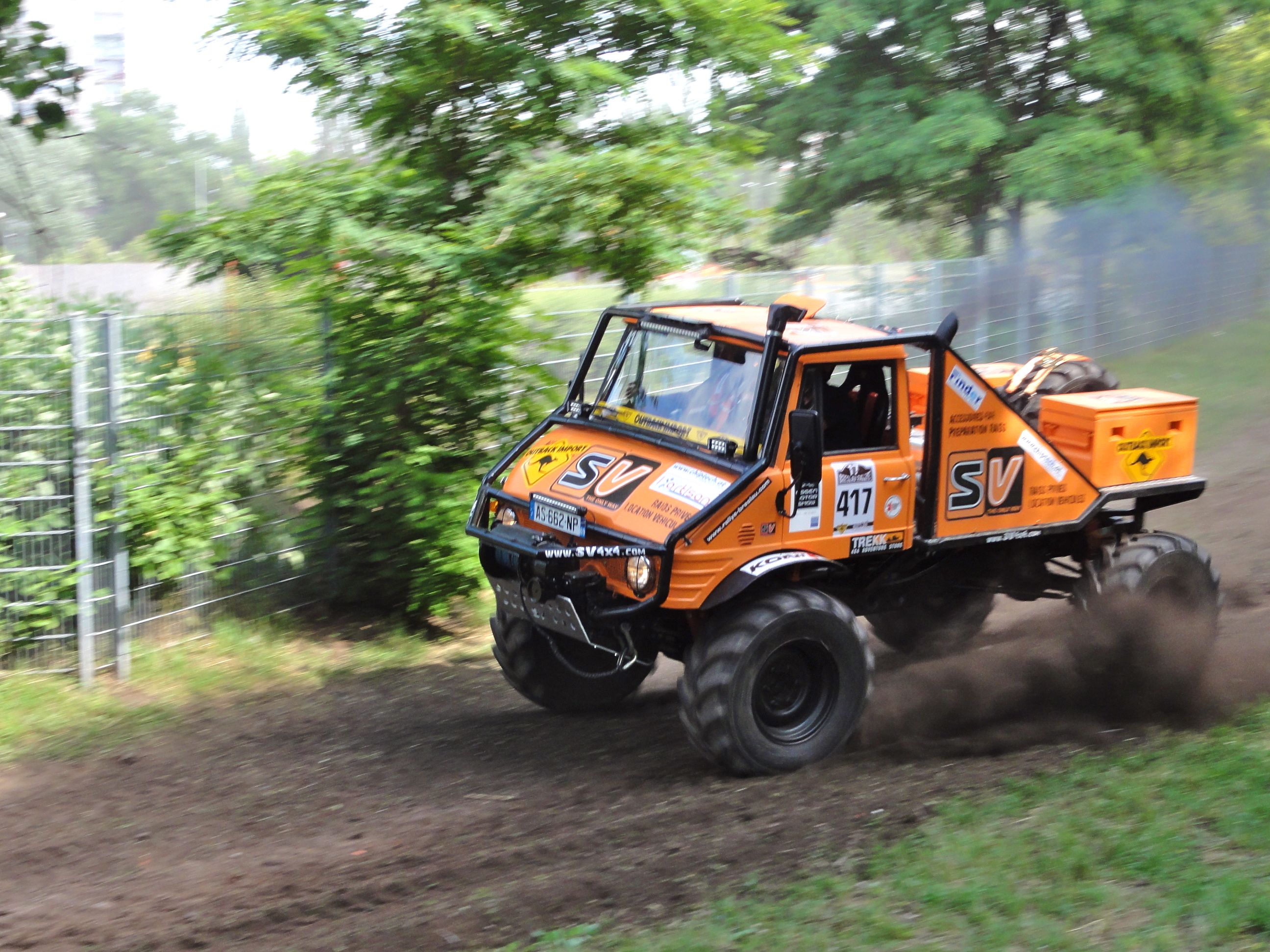
Sebastien Poncent and Tony Daudet placed 5th with the Unimog (417) in the <7.5 ton Truck Category.
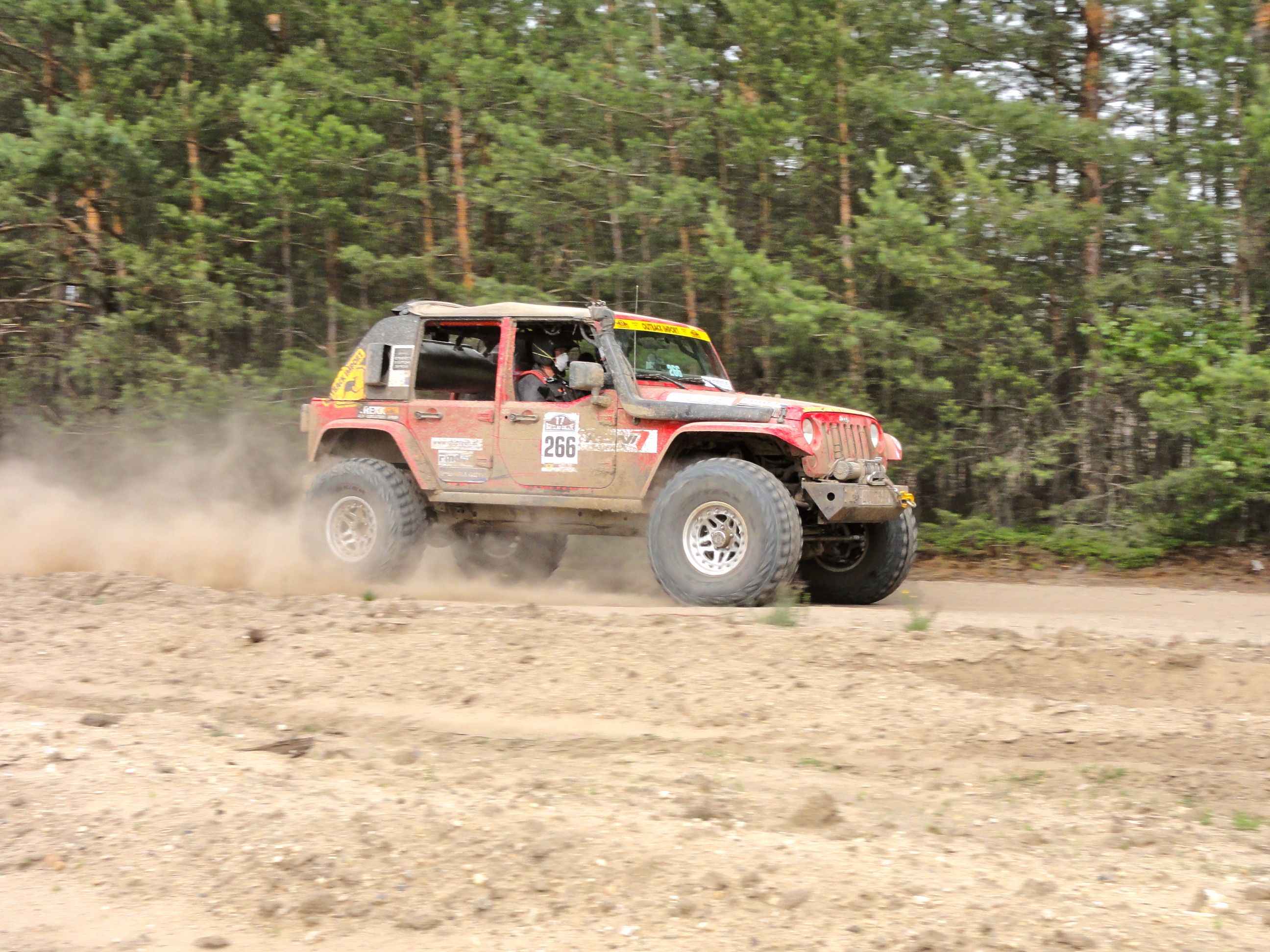
Pierry Adouch and Luc Burdino placed 24th with their Jeep JK (266) in the Car Category.
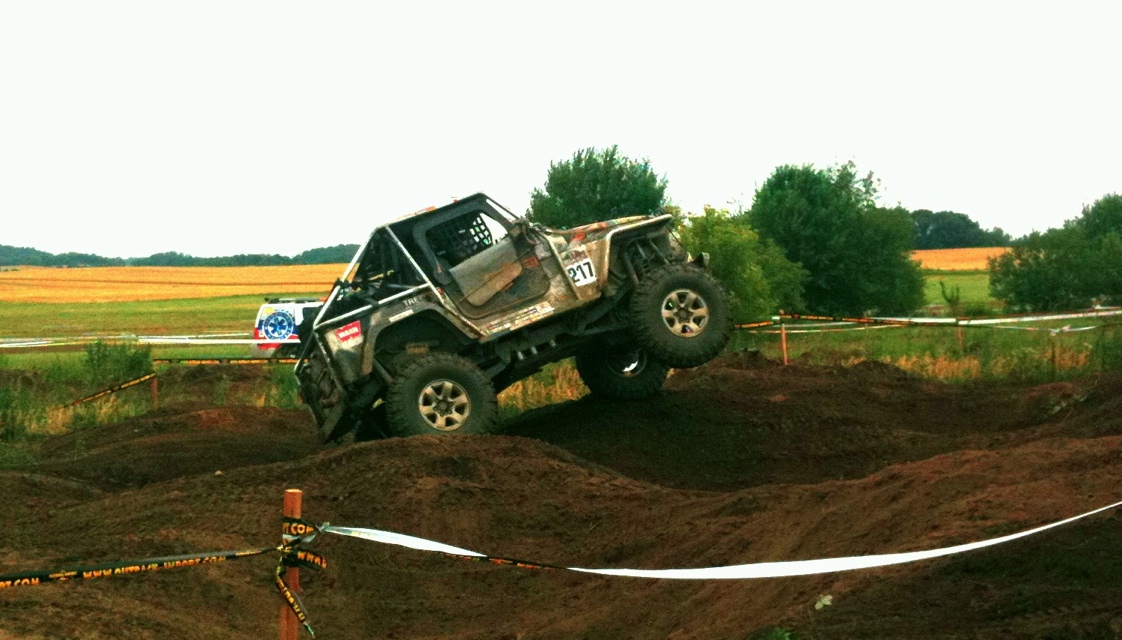
Xavier Sorinano and Emmanuel Gauthier were 30th with their Jeep TJ (263).

Philippe Gilles and Jean-Marc Olive (264: Jeep JK) came in 36th.

Bernard Cionini and Michel Molimard placed 37th with their Jeep JK (268).

We should have some more pictures up soon, as well as some news on what we’ve been up to for the past few weeks. Welcome to everyone visiting from Unimog-Mania! We have some posts on the way for you soon too.
July 5, 2011 2 Comments
We just got home from the Rally this evening. It will take a few days to get our photos and videos online.
In the meantime, check out RallyeBreslau’s Breslau 2011 Playlist on Youtube for a great video summary of the race. Our Internet access wasn’t good enough to watch these during the rally, and we haven’t watched them thoroughly yet, but we did find a few clips of our team.
Sebastian Poncet (Unimog pilot) and Xavier Soriano (Jeep pilot) from our team were interviewed on Wednesday evening after Stage 4. The interview is at timecode 1:42 in the video below:
You can also see a short sequence of the Unimog around timecode 4:20 in the June 24th video of the Base Camp. Our cameo is at timecode 4:30:
July 3, 2011 1 Comment
We woke on Saturday to a damp, cold and windy morning for the final Stage of the Rally. All the Specials were held near the camp, and the Start would be on the same circuit that had been prepared for the Finish of Stage 6.
The teams were to drive the course in the opposite direction before going to a second Special in a quarry, followed by a parade on the Dresden bridge. One of the drivers made an error while maneuvering at a Check Point and ran into a table, hitting one of the rally staff. After the accident the organization decided to cancel the Special in the quarry, so the rally ended on a disappointing note.
It started to rain around mid-afternoon when the teams arrived back at the campsite after finishing the race. They set immediately to work loading the cars in the trailers for transport home, barely stopping to savor the feeling of satisfaction at having completed the race. The cancellation, along with the cold and the rain, made the occasion seem dreary, when it should have been a time for celebration. Good preparation, determination and team work had been needed to reach the Finish; many of the other vehicles had been damaged along the way and had dropped out.

As we packed up the truck under the rain, we were wistful: sad that the 2011 Breslau Rally was over, but ready to go home. Evening brought a buffet dinner for everyone under the shelter of a large tent. There was live music and lots of beer: finally, the celebration of everyone’s achievement as the rankings were announced. No one from our team won any trophies, but everyone had made it to the Finish Line, the most rewarding prize of all.
The 2011 Breslau was our first rally experience, and it was fantastic! We met some wonderful people during the rally and made many new friends. We hope to see them all next year if we’re able to participate again, either as part of a service team or perhaps as competitors ourselves.
July 2, 2011 Leave a comment
It was a relatively relaxed morning; there was enough time for the maintenance, and no one felt pressed.
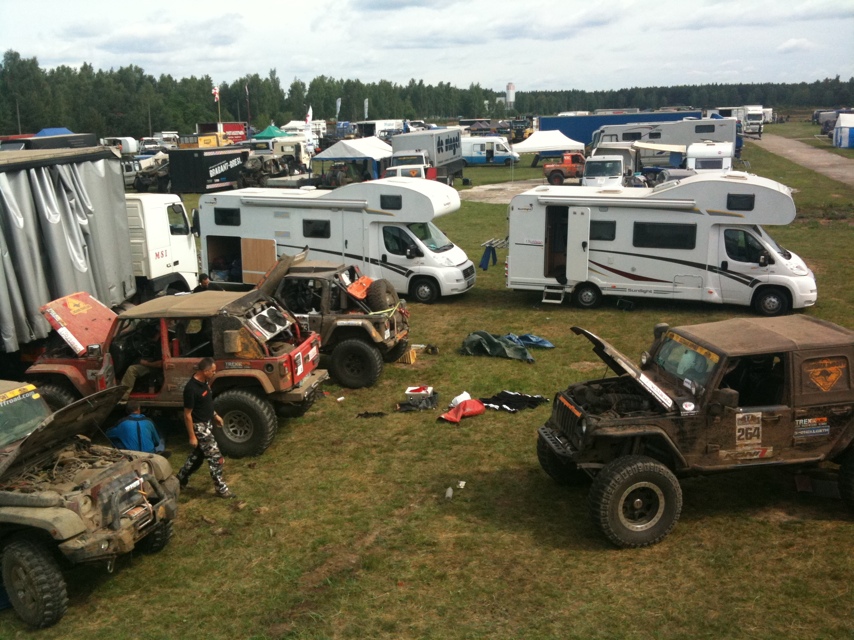
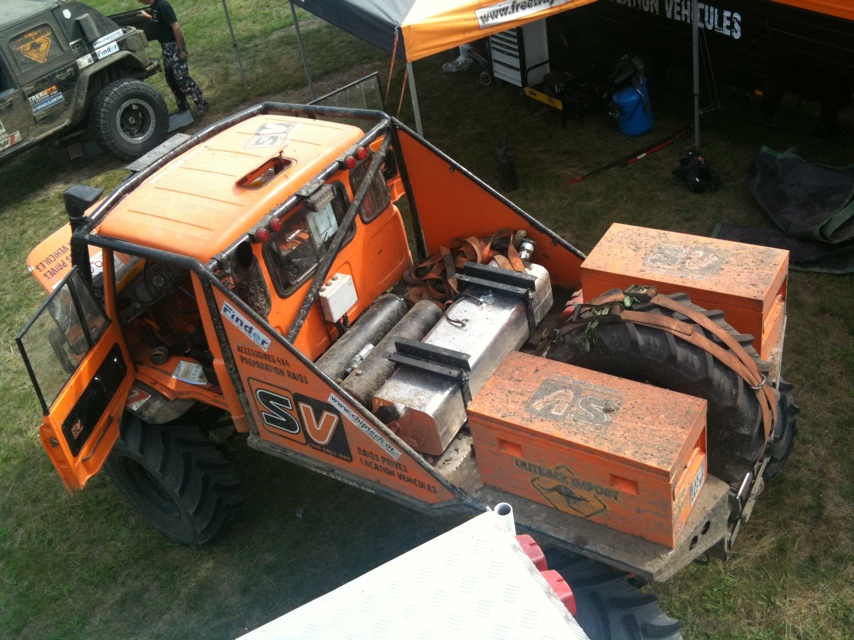
The camp in Zagan was an exceptional place. It was part of a military base and the site of Stalag Luft III, where Allied Air Force Prisoners of War made their famous escape by digging an elaborate system of tunnels beneath the camp. Unbelievable but true, the story was immortalized in several films including “The Great Escape” starring Steve McQueen. A portion of the tunnels is visible beneath a glass covering next to the memorials.
After the briefing, the teams began preparing for departure. The cars and trucks started the race around noon. Stage 6 was about 85 km long with 160 km of liaison. The Start was in the Zagan camp, and the first Specials were nearby.
The service vehicles had to break camp and transfer to Dresden, where the last Stage of the Rally would take place on Saturday. The camp in Dresden was around 170 km away, so we had time to watch a bit of the race before setting off.
The organization provided a few GPS coordinates for nice spots to take photos. We located them on the map and then picked one not too far away to watch a rapid passage in the sand.
Soon after we arrived we saw the first cars and trucks to pass on a fast dirt straight-away several kilometers long. After about a dozen vehicles had passed at intervals of a minute or two, there was a long pause. We had to wait what seemed like hours before we saw the next cars.
Later we learned that one of the Unimogs had rolled over, and the race was suspended while assistance attended to the vehicle and crew. We stayed until around 5pm, long enough to get some good photos of our team, powerful engines exploding through the countryside, clouds of billowing dust trailing behind as if the sand wanted to keep a memory of where they had passed.
Several hours later, when we arrived at the camp in Dresden, we set up quickly and headed over to watch the gymkhana at the Finish Line. It was dark, cold and windy. We drank coffee, huddled on the sidelines as the number of arrivals dwindled.
The Unimog arrived in camp just after midnight. It had been a good day for the team: two of our crew finished in the top third of the ranking for the Stage, coming in at the 14th and 39th positions.
When it was time to go to bed, we were glad to crawl under the covers; it felt like November. As the rally had advanced, there were progressively fewer and fewer generators running all night than at the start, so it was relatively quiet and peaceful to fall asleep to the sound of the wind, gently lapping at the tent.
Tomorrow would be the final day of the Rally.
July 1, 2011 Leave a comment
Sleep came quickly to those who had stayed up for most of the night preparing the vehicles for the Stage 5 marathon, but it didn’t last long. The cars and trucks departed at 6:30 am, and even though our teams were later in the starting order, they had last-minute checks to make before the start. Known by the name “Hannibal,” Stage 5 is over 500 km in length over varied terrain of sand, dirt and mud.

When everyone was underway, we broke camp and headed south 240 km to Zagan to set up again before evening. We’d be spending the day on the road and wouldn’t have a chance to see any of the 500 km Stage.
As we headed out we saw the signs of the heavy toll Stage 4 had taken. Many vehicles had to abandon the rally after suffering too much damage to repair overnight. Many cars were leaving on flatbed trailers and some stayed parked in camp, repairs still in progress. Our team was doing quite well; everyone had been able to start today.


It was raining when we reached the camp near Zagan, but the service crew quickly set up the tent and readied the tools in case repairs were needed once the drivers arrived.
We had to wait for over three hours before the first of our team made it to the camp. The day had been good. The route was long, but without any major difficulties they had few problems and made good progress.
The evening was relaxed since there was no need to work on the vehicles. We ate dinner together under the tent, and everyone went to bed around midnight with the prospect of getting a good night’s sleep; the briefing for Stage 6 wouldn’t be held until 10 am the following morning.
June 30, 2011 Leave a comment
Stage 4 of the Breslau Rally was 25 km longer than Stage 3, but the distance wasn’t the biggest challenge: it was the mud.
The starting point was again at the southwest corner of the camp, which is on a military base. Stage 4 took place entirely within the perimeter of the base. When our team had passed the starting point, we set out to follow the race using the many access roads that cross the area, sometimes passing alongside training areas for commandos and artillery units. At one point, rusty tanks dotted the horizon.
We found several good spots to watch and take photos, including one of the mud holes on the map for spectators near the halfway point of the race. It was a swampy passage about 50m long. The mud and water were over 2m deep in places. Even most of the trucks were winching to pass through, passing their cables around large tree trunks and pulling their massive bodies across. Relatively few vehicles made it through without winching. The trick was to have a vehicle well-adapted to the difficulty and choose the best way through it.
Our team’s Unimog made it look easy: a burst of power, down into and through the black bog, then up and over on the other side. They had made it in seconds where some of the biggest Man Kat’s would need their winches, but that situation wouldn’t last; the worst was yet to come.
We spent most of the afternoon at the mud hole, staying long enough to see two of the other cars in our team pass. As more cars and trucks struggled through and the passage wore away, it became almost impossible to cross without winching, and the second car of our team to arrive had to use the winch to get through.
As the race continued, the teams would encounter around a dozen more mud holes, some much more difficult than this one, where the cars couldn’t make it without being pulled through by one of the larger vehicles. While this might seem surprising, it’s true to the spirit of this race; the Breslau Rally is as much about determination, resourcefulness, and cooperation as it is about having the fastest, most powerful or best-prepared vehicle.

Our teams were late getting back to camp. The Unimog arrived at 9 pm and the last jeep around 10 pm. Exhausted, the co-pilots had a very hard day, climbing in and out of the car, wading in mud up to their chests, manipulating the cables for winching and taking care of the navigation in between.
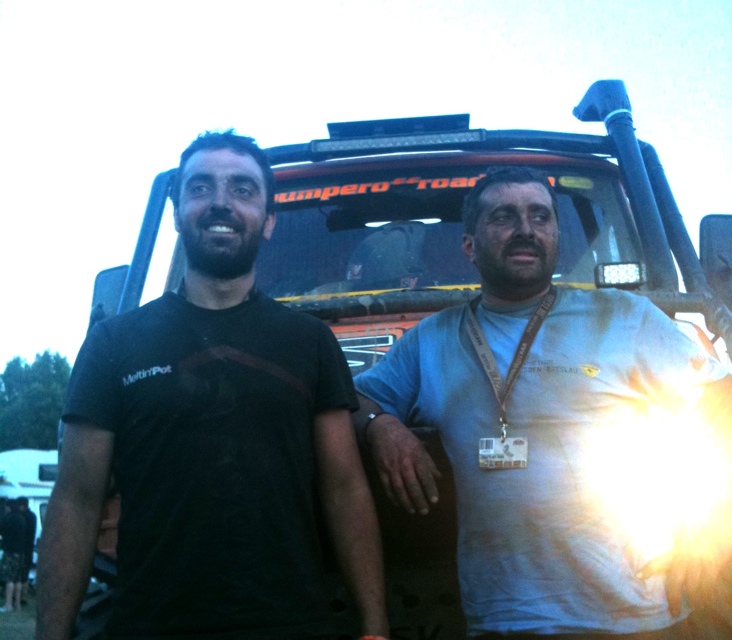
It was time for dinner. Most of the teams hadn’t had a chance to snack on their energy bars during the day, but the day wasn’t over yet, because the vehicles had also suffered and needed maintenance and some repairs.
For the Unimog, the team changed the oil and fluids in the engine, transmission, axles and brakes; drained the water that had infiltrated wherever it could; and cleaned off the biggest patches of mud and grass. The brakes weren’t working well, because mud had gotten into the brake pads, so they changed those too.
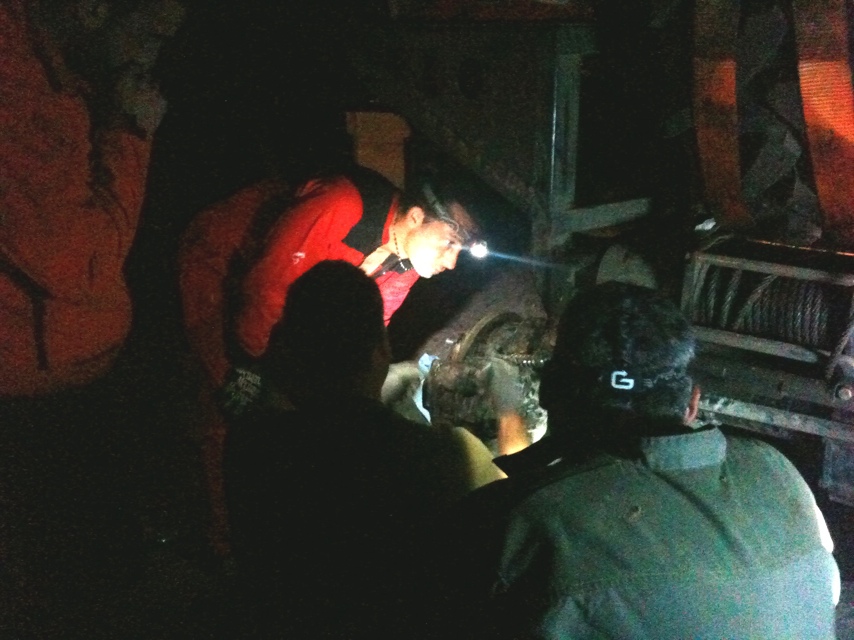
The team worked hard through the night; everything had to be in good shape for Stage 5, the marathon “Hannibal” Stage that started the next morning at 6:30 am.

Team info and sponsor opportunities
 Erg Machine